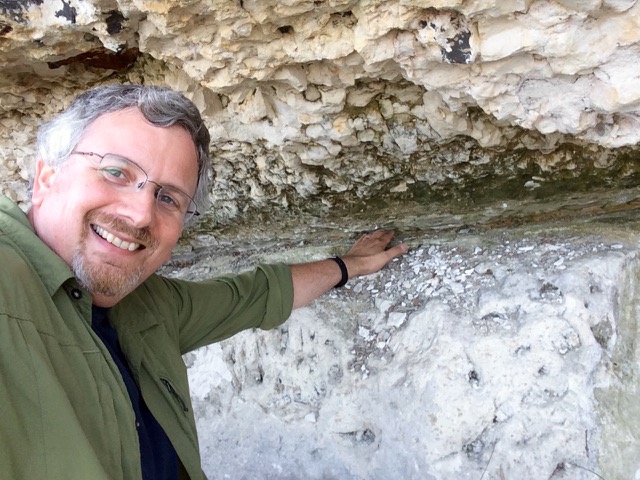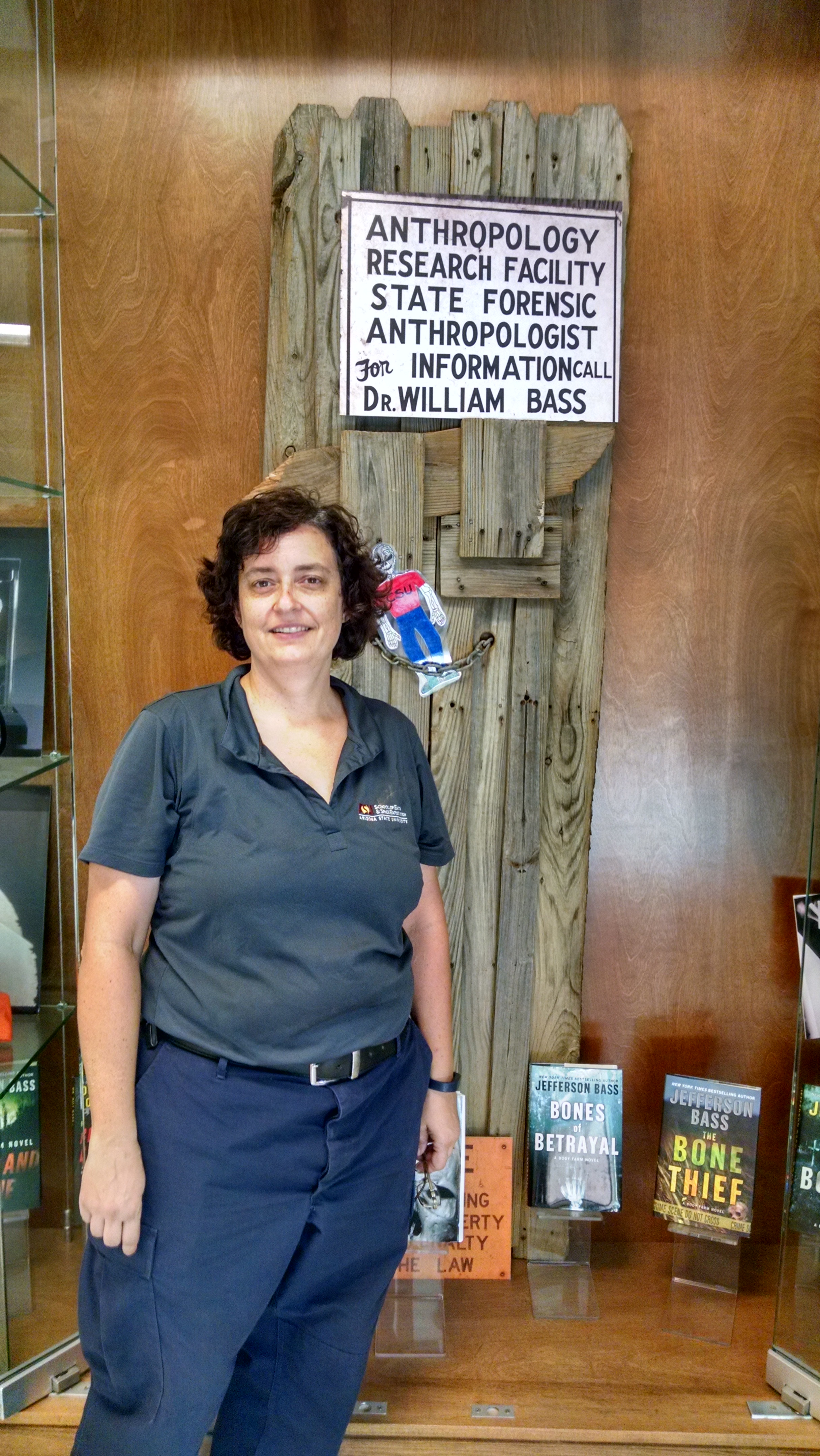
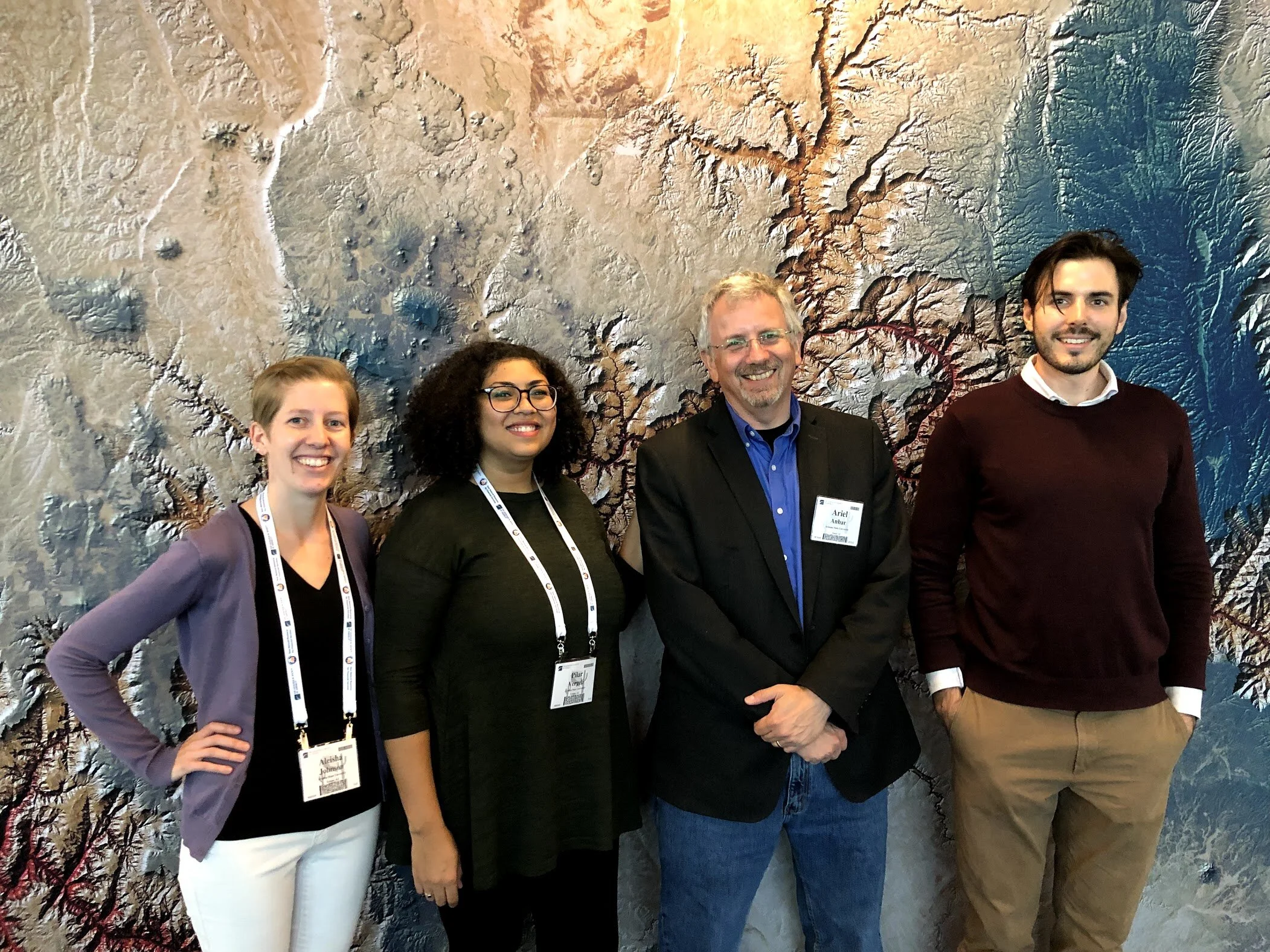

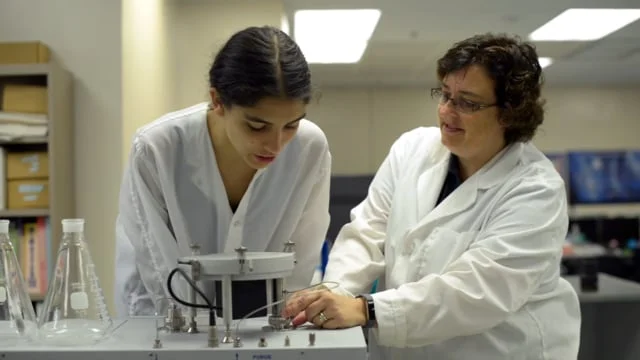
Welcome! The Anbarlab at Arizona State University is a diverse group of graduate and undergraduate students, postdocs, and research scientists, committed to exploring our world and developing applied solutions to the challenges we face. We hail from the fields of geology, chemistry, forensic science, and education. Take a look around and get in touch if what we do piques your interest. We're glad you found us!
Latest publications - Last Updated: October 2020
Conodont calcium isotopic evidence for multiple shelf acidification events during the early Triassic. Song, H., Song, H., Tong, J., Gordon, G.W., Wignall, P.B., Tian, L., Zheng, W., Algeo, T.J., Liang, L., Bai, R., Wu, K., Anbar, A.D. (2020) Chem. Geol. preprint available at. DOI: 10.1016/j.chemgeo.2020.120038
Expanding radiogenic strontium isotope baseline data for central Mexican paleomobility studies. Pacheco-Fóres, S., Gordon, G.W., and Knudson, K.J. (2020) PloS One. 15(2), e0229687. DOI: 10.1371/journal.pone.0229687
High Resolution Osmium Data Record Three Distinct Pulses of Magmatic Activity During Cretaceous Oceanic Anoxic Event 2 (OAE 2). Geochimica et Cosmochimica Acta. D. L. Sullivan,* A. D. Brandon, J. Eldrett, S. Bergman, D. Minisini, S. Wright (2020, in press)
Thallium isotope ratios in shales from South China and northwestern Canada suggest widespread O2 accumulation in marine bottom waters was an uncommon occurrence during the Ediacaran Period Ostrander, C.M., Owens, J.D., Nielsen, S.G., Lyons, T.W., Shu, Y., Chen, X., Sperling, E.A., Jiang, G., Johnston, D.T., Sahoo, S.K., Anbar, A.D. (2020) Chemical Geology, 119856. DOI: 10.1016/j.chemgeo.2020.119856
Biomarker evidence of algal-microbial community changes linked to redox and salinity variation, Upper Devonian Chattanooga Shale (Tennessee, USA) Song, Y., Gilleaudeau, G. J., Algeo, T. J., Over, J., Lyons, T. W., Anbar, A. D., and Xie, S. (2020) GSA Bulletin. DOI: 10.1130/B35543.1
An expanded shale δ98Mo record permits shallow marine oxygenation during the Neoarchean
Ostrander, C.M., Kendall, B., Olson, S.L., Lyons, T.W., Gordon, G.W., Romaniello, S.J. Zheng, W., Reinhard, C.T., Roy, M., and Anbar, A.D. (2020) Chemical Geology 532, 119391. DOI: 10.1016/j.chemgeo.2019.119391
Titanium isotopic fractionation in Kilauea Iki lava lake driven by oxide crystallization
Johnson, A.C., Aarons, S.M., Dauphas, N., Nie, N.X., Zeng, H., Helz, R.T., Romaniello, S.J., and Anbar, A.D. (2019) Geochimica et Cosmochimica Acta 264, 180-190. DOI: 10.1016/j.gca.2019.08.022
Global marine redox changes drove the rise and fall of the Ediacara biota
Zhang, F., Xiao, S., Romaniello, S.J., Hardisty, D., Li, C., Melezhik, V., Pokrovsky, B., Cheng, M., Shi, W., Lenton, T.M., Anbar, A.D. (2019) Geobiology 17, 594-610. DOI: 10.1111/gbi.12359
Multiple negative molybdenum isotope excursions in the Doushantuo Formation (South China) fingerprint complex redox-related processes in the Ediacaran Nanhua Basin
Ostrander, C.M., Sahoo, S.K., Kendall, B., Jiang, G., Planavsky, N.J., Lyons, T.W., Nielsen, S.G., Owens, J.D., Gordon, G.W., Romaniello, S.J. and Anbar, A.D. (2019) Geochimica et Cosmochimica Acta 261, 191-209. DOI: 10.1016/j.gca.2019.07.016
Anbarites in the NEWS!
ASU President's Professor Ariel Anbar elected as an AGU fellow ASU News, September 28, 2021
Ariel Anbar and Chris Mead with other scientists from NAU, UofA, and UC Boulder have been awarded almost $2 million from the NSF to develop a virtual reality teaching tool called Polar Explorer ASU Now, July 19, 2021
ASU Center for Education Through eXploration recognized nationally for innovative and effective student learning in virtual environments ASU Now, January 4, 2021
Ariel Anbar, Deputy Principal Investigator, awarded NASA ICAR proposal “What Life Wants: Exploring the Natural Selection of Elements” ASU Now, November 9, 2020
ASU President’s Professor Ariel Anbar awarded medal from the Geological Society of America ASU Now, August 24, 2020
Geological sciences PhD grad driven by desire to continue learning ASU Now, April 29, 2020
A curiosity for Earth’s early atmosphere helped PhD find her field of study ASU Now, April 27, 2020
ASU's NASA-funded Infiniscope program empowers teachers to become creators of digital learning experiences
ASU Now, March 3, 2020
Inspiring people to make better lifestyle choices -- through isotopes
EurekAlert, AAAS, January 24, 2019
Inspiring sustainability action through virtual field trips
ASU Now, January 3, 2019
ASU scientist to advance the reliability of forensic science evidence by studying isotopes in human skeletons
ASU Now, October 23, 2018
What caused the mass extinction of Earth’s first animals? ASU researchers help to unravel mystery of the Ediacaran-Cambrian transition
ASU Now, June 26, 2018
A passion for environmental chemistry and oceanography
ASU Now, April 29, 2018
ASU teams up with NASA to create interactive space exploration lessons
The State Press, April 25, 2018
current PROJECTS

Tracking bone metabolism

Are we alone in the universe?

Pyrite Oxidation Experiments

Taking a peek into the past

Seeking answers through exploration

BIFs are our BFFs!

What's in the aerosols, what's in the oceans?

Purple bacteria in Green Lake

Where are all the small worlds?

In sickness and in health...

A better way to teach science

Your hair knows what you did last summer
Hello, we're the Anbarites!